
COTTON & CANVAS · SIZE DEVELOPMENT
In a past Rivta production project, untreated all-cotton material had already been cut and screen-printed when the team found that its length was 2.5 cm short of the approved sample. Further contraction brought the reported discrepancy to 4 cm. The material was returned instead of being sent into sewing.
That experience changed the way we prepare all-cotton greige fabric: shrink-treatment comes before cutting, followed by an unrolled resting period of at least four hours. For a buyer developing a cotton cosmetic bag, this is the first size decision to settle. The next is the finished bag’s required fit after the intended washing and drying procedure.
Keep those two decisions connected in the specification: prepare the fabric for production, approve the supplied bag, and define the post-wash dimensions and usable fit where washing is part of the intended use. Our canvas and cotton cosmetic bag range is the sourcing route for discussing the selected fabric and construction.
A length problem discovered after printing, before sewing
The production team noticed the 2.5 cm length discrepancy when the printed cut parts came back and were being prepared for sewing. They subsequently reported further shrinkage, reaching 4 cm. Width had changed much less in that particular incident. The parts were unsuitable for the approved size, so the material was returned.
After the material received shrink-treatment, the team reported that the same problem did not recur during cutting, screen printing and production. The practical correction was to address the fabric state before making another set of parts.
This was a production-stage problem. The reason for describing the sequence is to show where the size discrepancy became visible and what the team changed. For a similar project, compare the cut-part length and width with the approved pattern before sewing, especially after the printing stage. Catching a discrepancy there gives the team a specific dimension to resolve.
Our current preparation route for all-cotton greige fabric
Rivta’s production team describes the current routine in this order:
- Have the all-cotton greige fabric shrink-treated before it returns for cutting. Agree the treatment route for the selected material.
- Unroll the material and leave it for at least four hours before cutting. The team uses this resting stage to let the material settle further.
- Proceed with cutting, printing and sewing using the prepared material. Keep the approved pattern and sample available for dimensional comparison.
For the buyer’s brief, name the material state that the approved sample represents. That gives development and production a common starting point when reviewing the pattern and the supplied bag size.
Steam and water treatment are different routes
The factory team describes both steam treatment and water treatment for all-cotton material. In its experience, rough shrinkage estimates discussed for these routes are around 4% and 10%, respectively. These are factory working estimates rather than results from a specified laboratory test.
| Route | What the team describes | What to confirm for the chosen material |
|---|---|---|
| Steam treatment | A steam shrink-treatment route, with a working estimate around 4%. | The selected process and the resulting length and width before fixing the cutting dimensions. |
| Water treatment | A brief water immersion, described as around ten seconds, followed by oven drying and setting; normally one water-treatment pass. The working estimate is around 10%. | The complete treatment and drying sequence, then the material dimensions used for sampling and production. |
The processing team also reports that both length and width can change during shrink-treatment, and that length change varies. Measure the two directions separately on the selected material. An allowance for the cutting pattern should follow those observations and the chosen construction, rather than applying one headline percentage to every dimension.
Specify the fabric state and the two finished-bag size states
Fabric preparation and finished-bag acceptance answer different questions. Record them together so the supplier can coordinate the material, pattern, lining and closure.
| Checkpoint | Buyer requirement | Evidence to review |
|---|---|---|
| Fabric prepared for cutting | Selected fabric and treatment route; sample and production should use an agreed material state. | Length and width observations for that material, and the pattern revision based on them. |
| Finished bag as supplied | External dimensions, useful opening, intended contents and packaging fit. | A marked measurement drawing and an approved finished sample with the actual reference contents. |
| Finished bag after intended care | Post-wash dimension limits and usable fit, where washing is part of the intended use. | The agreed washing/drying procedure, before-and-after readings, and a repeat loading and closure check. |
For each finished-bag dimension, mark the endpoints on the drawing. Specify whether the bag is empty, laid flat or standing in its normal shape, and keep that position consistent. A tapered body may need separate widths at the zipper and base; a box-shaped pouch may need a clearly defined base depth.
Increasing the cutting dimensions also affects the bag as supplied. Review the revised sample against its paper sleeve, carton or other packaging, as well as the intended contents. Extra allowance is a development decision to check through a sample.
Review the complete bag’s fit after the intended wash
Use the actual contents, including packaging, caps and protruding parts, to define usable fit. Check whether a rigid compact passes through the opening, whether the lining leaves enough room, and whether the zipper closes with all required items inside. Repeat that same loading task after the agreed care procedure.
Record what changed: a body dimension, the opening, the position of the lining, or the base shape. A measurement and a fit observation together give the pattern developer a more useful instruction than “the bag became smaller.” If the material, lining or closure changes after approval, use the sample-change review guide to identify which earlier decisions need confirmation again.
Attach the washing and drying procedure to the result
ISO 6330:2021 covers domestic washing and drying procedures for textile testing1. Its public scope identifies washing and drying as parts of a complete test and notes that equipment and detergent choices can affect results.
ISO 5077:2007 addresses dimensional change after specified washing and drying procedures2. Where a standards-based assessment is chosen, agree the applicable procedure and edition with the supplier or laboratory. Set the project’s acceptable dimensions and fit separately.
Keep each initial reading beside its final reading, with the sample identity, measurement location and care sequence. Review width and height individually, then record whether the required contents still load and the closure still operates.
Bring the material route and size requirements into one RFQ
Send Rivta the selected cotton fabric or reference, marked dimensions, intended contents, packaging limits and proposed care instructions. State the supplied-state size and any post-wash fit requirement separately, together with the quantity and launch timing.
We can discuss the pre-treatment route and sample development using that brief. For the earlier fabric-selection questions, the canvas material and claim guide provides a related starting point.
Buyer questions
Can we use the factory’s 4% or 10% estimate as the cutting allowance?
Use the selected treatment route as a discussion starting point, then review actual length and width observations for the chosen material. Coordinate the pattern, lining and closure in a sample, and approve its supplied size and any required post-wash fit.
What should be checked if printed parts come back too short?
Compare the affected direction with the approved pattern or sample before sewing. Review the material’s treatment history and the stage at which the change appeared, then agree the corrective material route and check replacement parts against the approved dimensions.
Scope of the factory experience
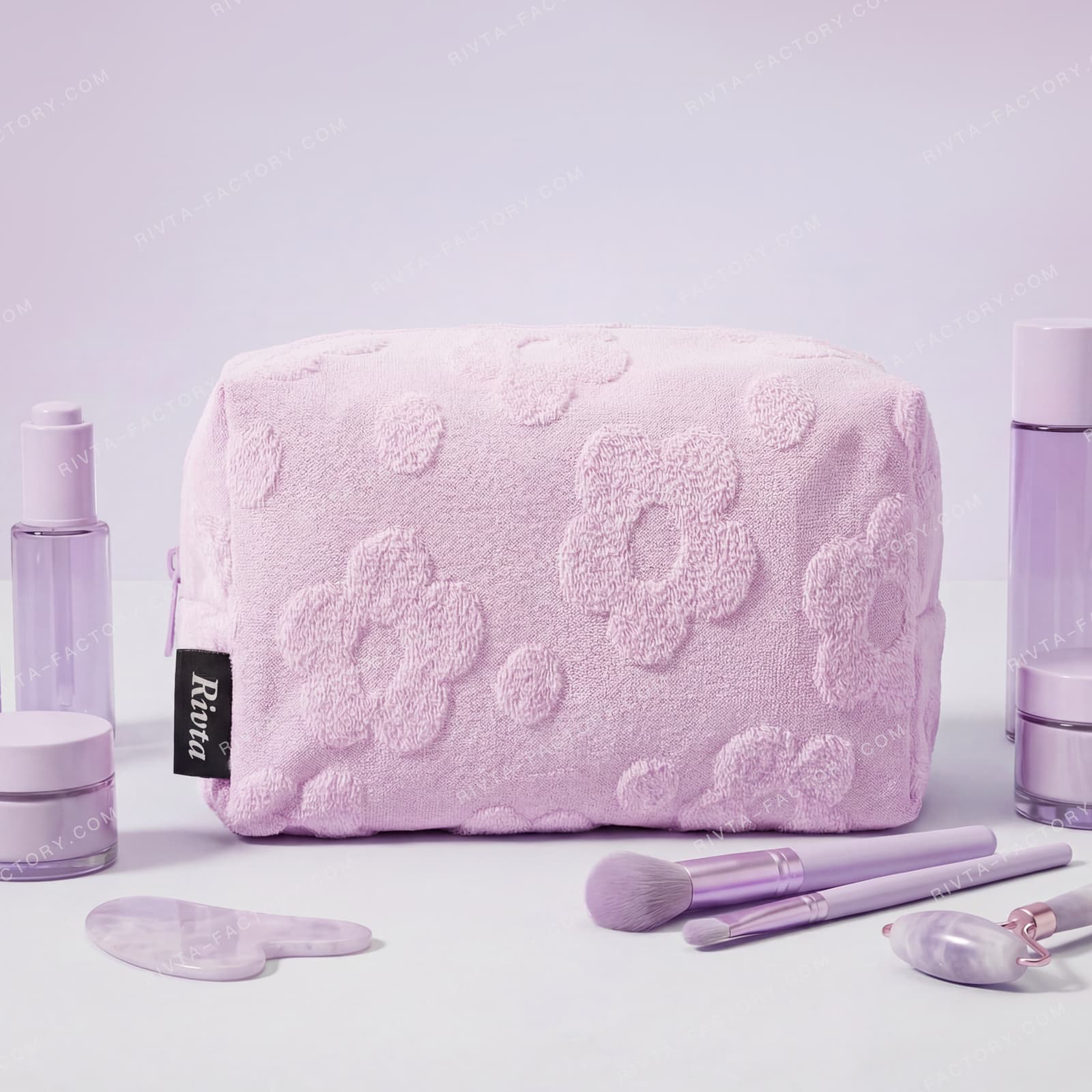
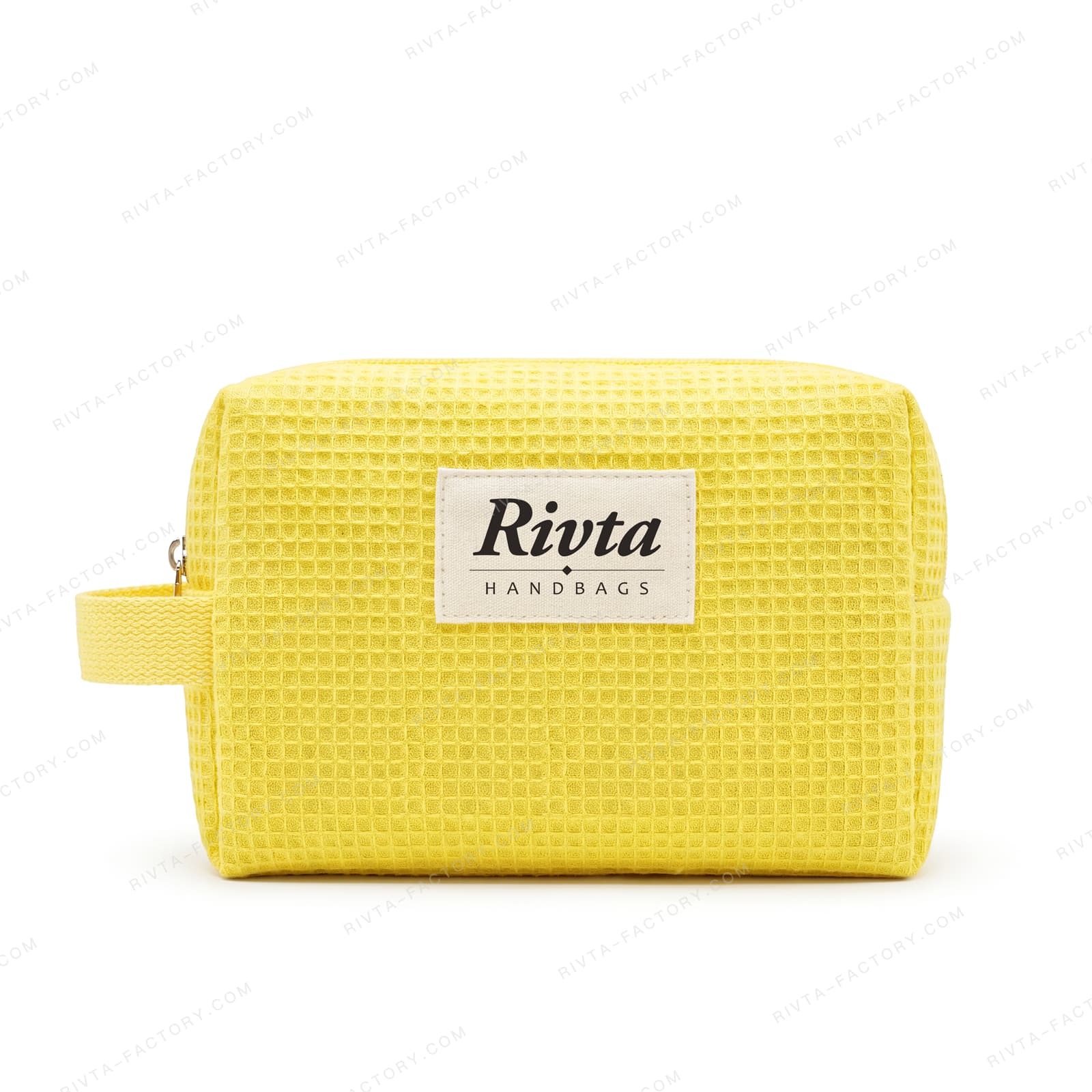
The production account above concerns material preparation and cut parts before sewing; it is not a finished-bag domestic-wash test. The photographs show current product references rather than the reported incident. A project’s washability, residual shrinkage, colour and decoration durability require evidence for its selected finished construction and intended care procedure.
Sources
- ISO, ISO 6330:2021 — Domestic washing and drying procedures for textile testing: official public scope for choosing the care procedure. ↩
- ISO, ISO 5077:2007 — Determination of dimensional change in washing and drying: official public scope for dimensional assessment. ↩
About the Author

WRITTEN BY JOLIAN LU, SEO MANAGER
Hi there! I'm a mom to an awesome eleven-year-old boy. I started in this business as a fresh-faced graduate and now lead Rivta-Factory's SEO and content work. Here to share my passion for sustainability and building a business that cares. Let's grow together!
